

Aharen Beach on Tokashiki Island, Okinawa.
Gachapon Giveaway!

Some examples of gachapon that can be found in Japan. (These specific gachapon are not included in the giveaway.)
Sightseeing Japan is excited to announce the Gachapon Giveaway! The first ten listeners to review the podcast will receive a free gachapon! To enter, follow these two simple steps: (1) Submit a review of Sightseeing Japan to any podcast provider where the podcast is available. (2) Send an email to feedback [at] sightseeingjapanpodcast.com. Be sure to include (i) your review, (ii) the name of the podcast provider where you submitted your review, and (iii) your mailing address. That’s it!

A bamboo grove at Hiroshima’s Shukkeien Garden.

Kagami mochi, one of the many decorations traditionally displayed in the home for New Year.

A Christmas tree at a shopping mall in Hiroshima.

Decorative Japanese swords for sale at a shop in Kamakura. (Real functional swords are much more expensive)

An informational panel at the Kawagoe Festival Museum about matsuri floats.
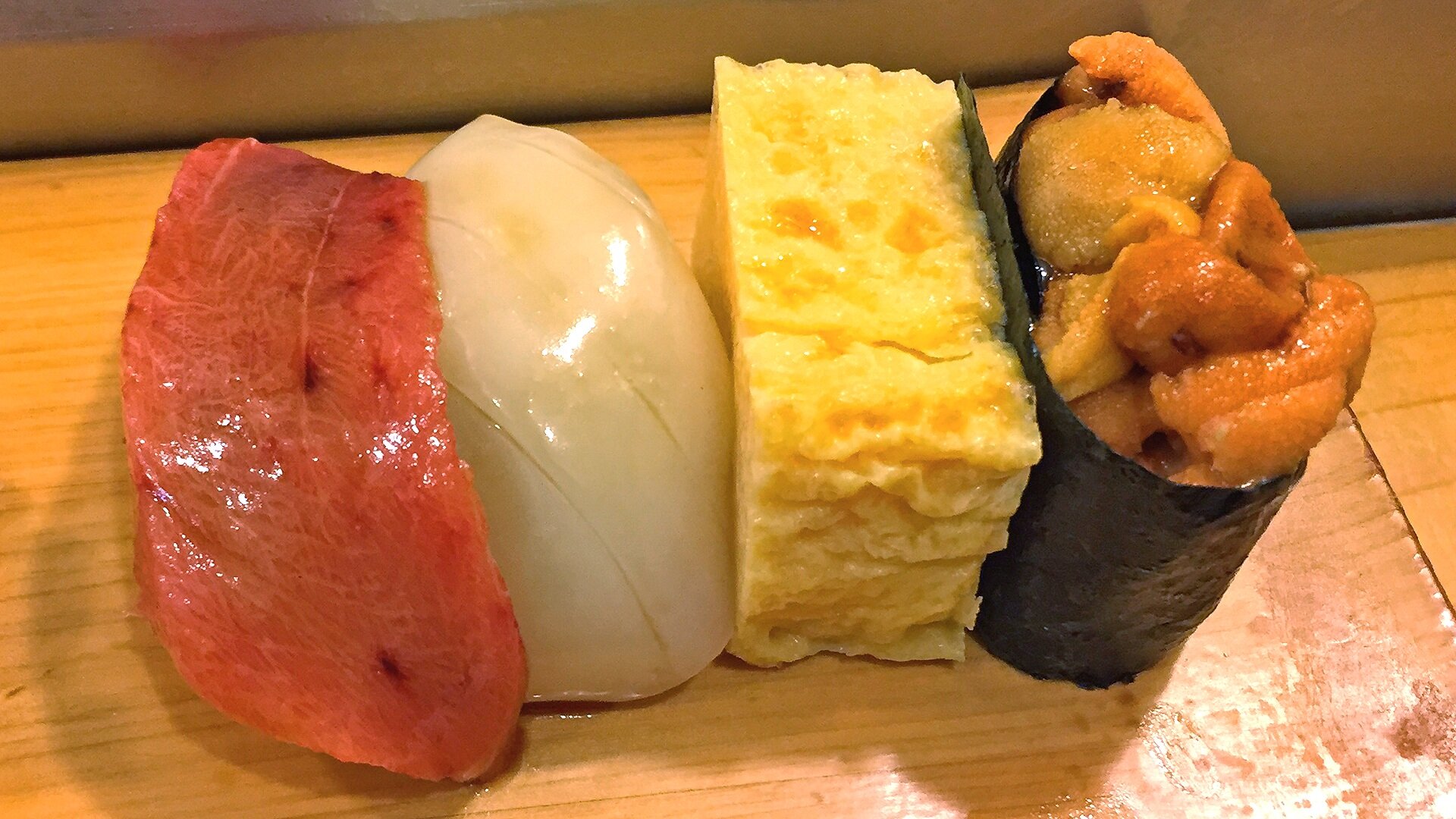
Various types of sushi from Daiwa Sushi, a sushi bar at Tsukiji Market in Tokyo.
21. Sushi
Sushi is a popular Japanese dish that has spread throughout the world. Join Jason and Paul as they explore the delicious world of sushi!
Topics Covered:
What is Sushi?
History
Types: Makizushi — Nigirizushi — Chirashizushi — Inarizushi — Old Styles (Oshizushi/Hakozushi/Narezushi) — Uramaki
Ingredients: Sushimeshi (Rice) — Nori (Seaweed) — Toppings — Condiments
Presentation

Girls wearing yukata (a light summer kimono) and zori (a type of traditional footwear) at a temple in Kyoto.
20. Kimono
Kimono are traditional Japanese garments that can be worn for many different occasions and with many different types of related accessories. Join Jason and Paul as they explore the world of traditional Japanese fashion!
Topics Covered:
What is a Kimono?
History
How are Kimono Made?
Cost
How to Wear a Kimono
Variations: Yukata — Furisode — Iromuji — Mofuku — Junihitoe
Footwear and Accessories

The remains of a house that was washed away in the tsunami caused by the 2011 Touhoku Earthquake. (Photo taken in Ishinomaki in 2015)

Himeji Castle.
18. Castles
Japanese castles are strategic defensive fortresses, but they were also built to be visually striking and impressive. Join Jason and Paul as they explore the history, architecture, and defensive capabilities of Japanese castles!
Topics Covered:
History
Architecture: Location — Main Keep (Tenshukaku) — Walls/Moats/Baileys — Yagura (Guard Towers) — Gates
How to Attack a Japanese Castle
Visiting Castles Today

Strong Zero is a type of drink called chuuhai, which is a portmanteau of “shouchuu” and “highball”. Shouchuu is a Japanese distilled drink.
17. Alcohol
Drinking plays an important part in Japanese society. Join Jason and Paul as they explore the world of Japanese alcoholic beverages and drinking culture!
Topics Covered:
History
Drinking Culture: Konpa — Nomikai — Etiquette — Social Impact
Types of Beverages: Nihonshu (Sake) — Beer — Shochu — Chuhai — Umeshu — Wine — Whisky
Where to Drink
16. Ghosts and Monsters (Yurei and Yokai)

Paul in Shibuya on Halloween of 2016.

The crowd goes on forever!

Lots of nice costumes.

Police keeping an eye on things.
15. The Japanese Language
Did you know that the Japanese language uses three distinct writing systems? Join Jason and Paul as they explore the history and complexities of the Japanese language!
Topics Covered:
How is the Japanese Language Structured?
History
Writing Systems: Kanji — Hiragana — Katakana — Romaji
How to Learn Japanese

A row of vending machines in Ikebukuro, Tokyo.

The moss garden at Gioji, a small temple in Kyoto.
13. Japanese Gardens
Japanese gardens are famous around the world for their ability to convey peace, harmony, and tranquility through the art of landscaping. Join Jason and Paul as they explore the ancient art of Japanese gardening!
Topics Covered:
History
Elements of Japanese Gardens: Water — Stone — Bridges — Fish — Lanterns — Water Basins — Plants — Islands
Aesthetic Principles: Miniaturization — Concealment — Borrowed Scenery — Asymmetry

Geisha performing at Kaikaro, a teahouse in Kanazawa.
12. Geisha
Geisha are symbols of Japanese culture, beauty, and femininity. Join Jason and Paul as they discuss the magical "flower and willow world" of geisha!
Topics Covered:
What are Geisha?
History
How to Become a Geisha: Skills/Training — Maiko (Apprentice Geisha) — Appearance
Where to Experience Geisha Culture

A sumo match at a tournament in Fukuoka.

The view of Mount Fuji from the fifth station.
10. Mount Fuji
Mount Fuji is a symbol of Japan and is one of the most famous volcanoes in the world. It even ties into the origins of the Shinto religion! Join Jason and Paul as they explore this beloved landmark.
Topics Covered:
Cultural Significance
How to Climb
What to Bring
What Will You See?
Aokigahara (Suicide Forest)

Byodoin, a Buddhist temple in Uji, Japan.
9. Temples and Shrines
Temples and shrines are everywhere in Japan, but did you know that they are two distinct types of structures belonging to different religions? Join Jason and Paul as they discuss the significance of temples and shrines throughout the history of Japan!
Topics Covered:
Buddhism
Shinto
How is Religion Practiced
History
Buddhist Temples: Etiquette — Gardens — Jizo — Cemeteries — Omikuji (Fortune Telling)
Shinto Shrines: Torii Gate — Chozuya (Purification Basin) — Honden (Main Hall) — Ema (Wooden Plaques) — Amulets — Goshuincho (Stamp Book)